Renewal and Retrofit: further detail confirms the direction of travel
When the Department for Education published its Education Estate Strategy in February, one of the most interesting developments was the announcement of the £710 million Renewal and Retrofit Programme. At the time, the programme appeared to address a longstanding gap in capital funding, sitting between routine maintenance allocations and full rebuilding.
The latest guidance provides more detail on how the first phase will operate and confirms many of the themes already set out in the strategy.
A programme aimed at the missing middle
For years, Responsible Bodies have faced a difficult challenge. Many buildings have condition issues that exceed what can realistically be addressed through annual maintenance funding, yet are not sufficiently poor to qualify for rebuilding. The Renewal and Retrofit Programme is explicitly intended to address this gap.
The DfE describes the programme as supporting buildings that “cannot be delivered from existing maintenance funding but that are not at the point where rebuilding is the only solution”. That acknowledgement is welcome and reflects the reality faced by many estates teams.
Rather than focusing solely on individual defects, the programme seeks to extend the life of buildings, reduce reactive patch-and-mend maintenance and prevent further deterioration.
A more strategic approach to the estate
The latest guidance also reinforces a broader shift that runs throughout the Education Estate Strategy: moving from reactive maintenance towards more strategic asset management.
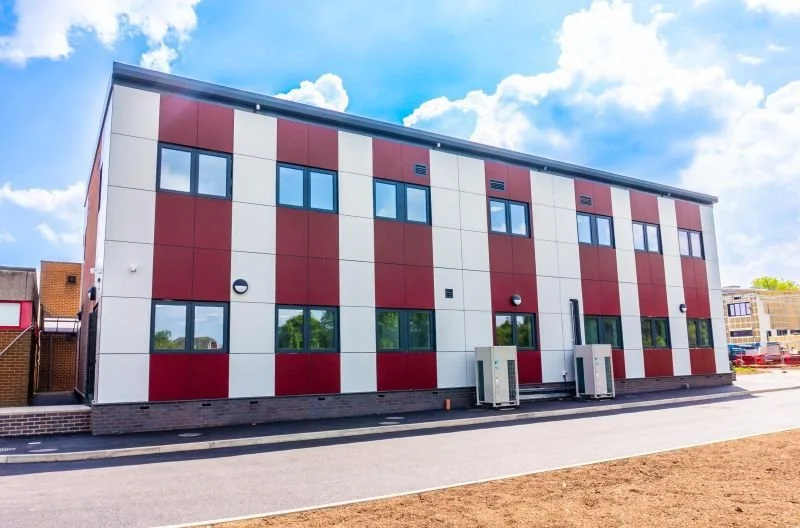
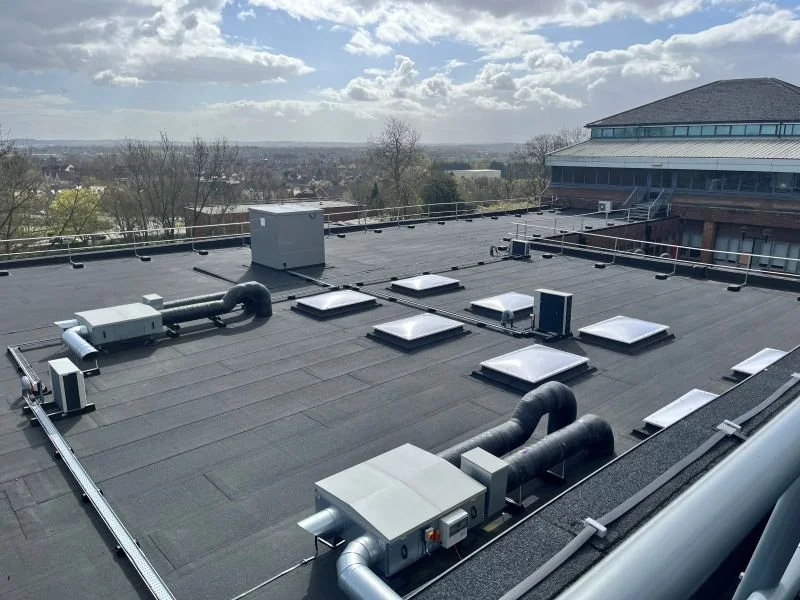
While phase one focuses primarily on replacing life-expired temporary buildings and installing solar photovoltaic panels, some participants will also receive:
Asset resilience and decarbonisation plans.
Digital estate management tools.
Building controls optimisation.
Behaviour change initiatives to improve energy efficiency.
Taken together, these elements point towards a more holistic model of estate management. Condition, resilience, sustainability and operational performance are increasingly being treated as interconnected rather than separate priorities.
This aligns closely with the wider direction of the strategy, which places greater emphasis on estate intelligence, data quality and long-term planning.
Further detail on programme delivery
The guidance confirms that the first phase will operate during 2026–27 and focus on schools and colleges in Yorkshire and the Humber, the East Midlands and the South East.
Importantly, there will be no application process. Selection will be based on condition need, with the DfE contacting eligible schools and colleges directly. Being contacted does not guarantee inclusion, but rather indicates that further information is required to determine suitability.
Delivery will be supported by regional partners undertaking surveys, developing designs and coordinating works, with successful projects benefiting from central oversight and funding.
Scope and ambition remain ahead of available funding
The additional detail is helpful, but it does not materially change some of the observations made when the strategy was first published.
The integrated approach to condition, resilience and decarbonisation is undoubtedly welcome. However, many buildings across the estate require significant fabric improvements before wider energy efficiency measures or low-carbon technologies can deliver their full benefits. Decades of underinvestment cannot be reversed quickly.
Similarly, while £710 million represents a significant investment, the scale of need remains substantial. The first phase is necessarily limited in geography and scope, with previous indications suggesting around 50 projects. Many Responsible Bodies with pressing condition challenges will therefore not see immediate benefit.
Given the age profile of the school estate, with 43% of buildings constructed between 1941 and 1980 and now beyond their original design life, the current scale of the programme may prove insufficient to meet estate-wide need.
As previously noted, maintenance funding will remain the principal mechanism for improving most estates. Strategic prioritisation and robust asset management will therefore continue to be essential.
Looking beyond the pilot
The Education Estate Strategy indicates that the programme will expand nationally from 2027, with over £450 million of projects expected to address buildings with extensive condition issues, including roofs, heating and electrical systems. The strategy also envisages wider assessments of flood resilience, overheating risks and digital connectivity requirements. However, detailed delivery arrangements, including the number of projects and whether an application process will be introduced, have yet to be confirmed.
Looking further ahead, the strategy envisages a more mature programme from 2029 onwards, capable of delivering multifaceted projects across the country through the Renewal and Retrofit Programme or alternative funding mechanisms. At present, however, the extent and continuity of future funding remain uncertain and are unlikely to become clearer until future spending reviews.
The message for Responsible Bodies
Perhaps the most significant aspect of the programme is what it reveals about the direction of travel for capital funding. The programme is built around evidence, condition intelligence, resilience planning and digital tools rather than competitive bidding. Combined with the planned replacement of the Condition Improvement Fund from 2028, this suggests the DfE is moving towards a more data-driven and strategically managed capital system.
While the selection criteria for the planned 2027 expansion have not yet been published, it seems likely that existing Condition Data Collection information will continue to play a significant role in identifying candidate sites.
National rollout of Responsible Body-led condition data sharing is expected to begin during 2027 and is therefore unlikely to be sufficiently mature to inform the early stages of programme expansion. Responsible Bodies should use the intervening period to strengthen estate intelligence and gather supporting evidence that may support future selection processes.
More broadly, the programme reinforces the importance of:
Maintaining accurate estate data.
Embedding strategic asset management practices.
Developing long-term maintenance and sustainability plans.
Engaging fully with emerging estate standards and digital tools.
Organisations with clear investment priorities and robust estate intelligence are likely to be best placed to respond as future programmes evolve.
A promising start, but delivery will matter
The publication of this guidance provides greater clarity, but it largely confirms rather than changes the picture set out in the Education Estate Strategy.
The direction of travel is positive. There is clear recognition that condition, resilience and sustainability need to be considered together, and the programme addresses a gap that has existed for many years.
The real test, however, will be scale and delivery. If the pilot proves successful and national rollout follows in 2027 as planned, the Renewal and Retrofit Programme could become an important component of a more strategic and sustainable approach to managing the education estate. Whether the level and continuity of investment ultimately match the scale of the challenge remains the key question.
How prepared is your estate?
With the DfE increasingly emphasising condition intelligence, strategic asset management and long-term planning, Responsible Bodies with a clear understanding of their estate are likely to be best placed to respond to future funding opportunities.
If you would like to discuss the challenges posed by ageing buildings, opportunities presented by the Renewal and Retrofit Programme, or your wider estate strategy, please get in touch.
You can also download our guide to the Education Estate Strategy, which explores the key programmes, funding changes and practical implications for Responsible Bodies.